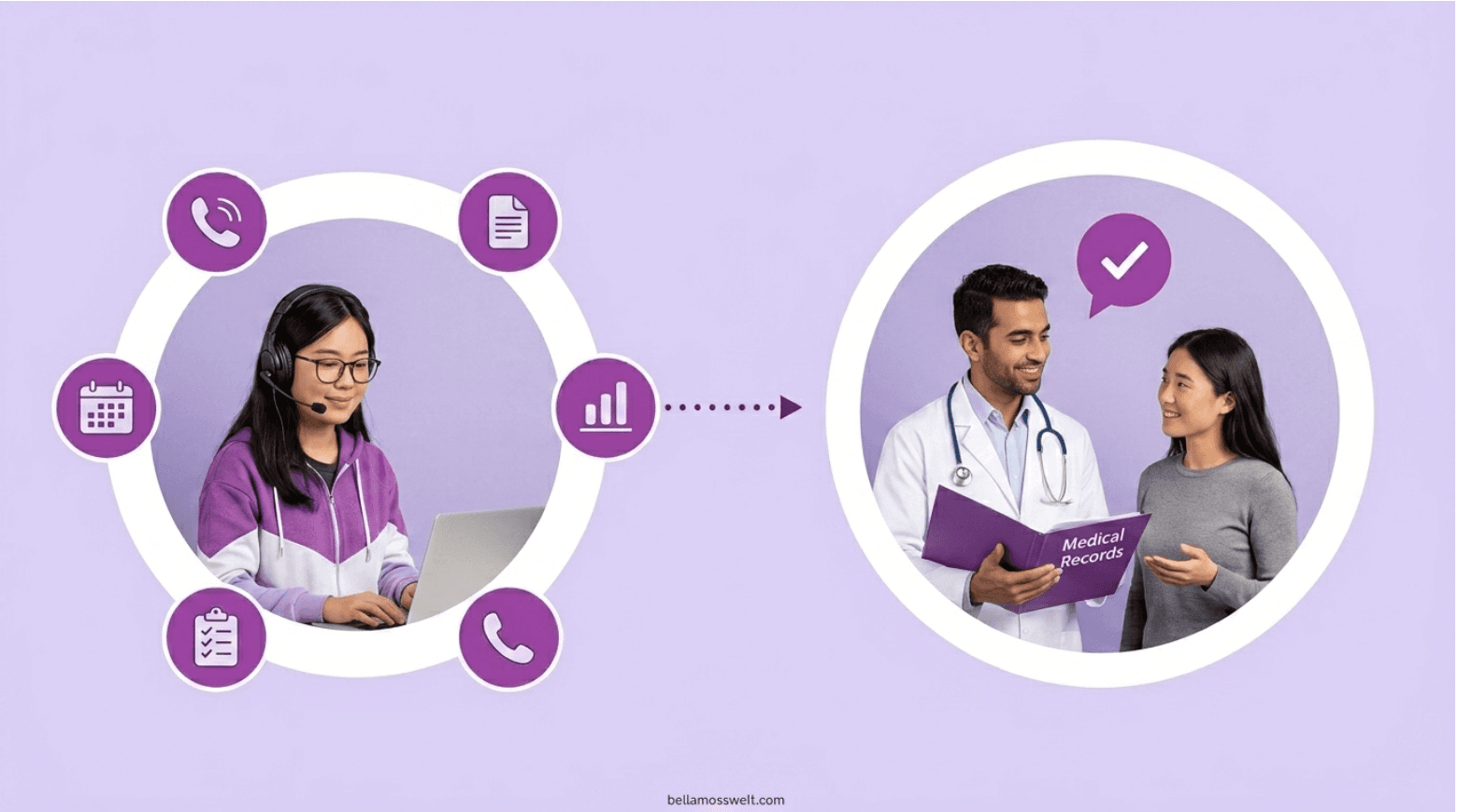
Virtual Receptionist For Medical Practice is changing how clinics handle calls. Virtual Receptionist System helps staff stay free from constant phone pressure. Many clinics now use Virtual Receptionist System to improve daily workflow. A Virtual Receptionist System supports patient calls, bookings, and messages. An Automated Receptionist System helps reduce missed calls and improves response time. This setup keeps front desk work simple and smooth.
Virtual Receptionist System gives clinics better control over patient flow. Virtual Receptionist System improves communication and reduces missed calls. It works as a Virtual Receptionist System that handles scheduling and patient messages. The Automated Receptionist System supports faster replies and smoother intake. Clinics trust Virtual Receptionist For Medical Practice to manage daily calls with less stress. This system helps teams focus more on patients and less ringing phones.
What Is a Virtual Receptionist for Medical Practice?
Virtual Receptionist is a digital service that handles patient calls and messages for clinics. It works outside the physical front desk and supports staff remotely. A Virtual Receptionist System answers calls, routes patients, and manages appointments. An Automated Receptionist System reduces missed calls and keeps communication smooth. Virtual Receptionist helps replace traditional front desk pressure with flexible virtual coverage. It allows clinics to stay available even when staff are busy.
Virtual Receptionist improves accessibility for patients by offering quick responses at any time. Traditional front desks depend on staff Virtual Receptionist uses Virtual Receptionist System to extend coverage. The Automated Receptionist System supports scheduling patient inquiries and improves service availability for clinics. This shift from physical front desk to digital support helps clinics respond faster and serve patients.
Types of Virtual Receptionists in Healthcare
Virtual Receptionist includes different service types used in clinics today. A Virtual Receptionist System helps manage patient calls and routing with ease. An Automated Receptionist System supports basic automation and improves efficiency overall. These tools reduce front desk pressure and improve communication daily fast. Healthcare providers choose different types based on size, budget and patient demand efficiently.
- Auto-attendant systems use Automated Receptionist System for basic greetings and call routing tasks.
- Live virtual receptionist services provide human agents within Virtual Receptionist For Medical Practice support.
- AI powered systems enhance Virtual Receptionist Systems with conversational AI and faster responses.
- Pros and cons vary depending on Automated Receptionist System complexity and healthcare needs.
- Small clinics prefer Live virtual receptionist Service while large hospitals need hybrid systems.
- Virtual Receptionist System improves scalability, reduces workload and boosts patient communication efficiency overall.
- Automated Receptionist System integrates all types into a unified healthcare communication workflow platform solution.
What a Virtual Receptionist Can Do for a Medical Practice
Virtual Receptionist For Medical Practice helps clinics answer incoming patient calls instantly. A Virtual Receptionist System ensures every call is handled without delay. An Automated Receptionist System supports fast responses and smooth communication. It can handle new patient inquiries and collect basic information. It also schedules and reschedules appointments with ease. Patients get quick answers and better support. Clinics reduce pressure on staff and improve service quality through automation and virtual support.
Virtual Receptionist also improves advanced call handling inside clinics. A Virtual Receptionist System routes billing and insurance calls to correct departments. An Automated Receptionist System provides directions and basic practice information to patients. It escalates urgent or emergency calls and handles prescription refill requests efficiently. It improves workflow and ensures patients always reach the right medical support quickly with better coordination and response systems efficiently.
Benefits of a Virtual Receptionist for Medical Practices
Virtual Receptionist improves clinic efficiency and patient communication in daily operations. A Virtual Receptionist System helps manage calls, bookings, and inquiries without delays. An Automated Receptionist System reduces workload on staff and improves response speed. Together they reduce pressure on front desk teams and support better patient service outcomes in busy healthcare environments across practices today overall.
- Reduced missed and abandoned calls through Virtual Receptionist System in medical practices efficiently.
- Faster call answering and routing using Automated Receptionist System improves response times for patients.
- Improved patient experience with Virtual Receptionist System ensures smoother communication and care.
- Less pressure on front desk staff using Virtual Receptionist System reduces workload and stress.
- Higher appointment booking rates with Automated Receptionist System increase clinic scheduling efficiency significantly.
- Better operational visibility with call analytics using Virtual Receptionist System improves decision making.
- Practice revenue protection using Automated Receptionist System and Automated Receptionist System tools.
Virtual Receptionist vs Virtual Assistant in Healthcare
Virtual Receptionist For Medical Practice focuses on patient calls and communication. A Virtual Receptionist System handles incoming calls scheduling and routing. An Automated Receptionist System ensures every patient gets a quick response. A virtual receptionist mainly manages calls, inquiries and patient support. It keeps communication smooth at the front desk. A virtual assistant focuses on administrative tasks like emails documentation and data entry. It works behind the scenes rather than handling live patient calls.
Automated Receptionist System is better for call-heavy clinics that need constant patient communication. A Virtual Receptionist System helps route high volumes of calls efficiently and reduces missed opportunities. An Automated Receptionist System supports scalability while a virtual assistant suits back-office focused goals. Choosing depends on operational priorities and patient interaction needs in healthcare practices. Call-heavy systems benefit more from receptionist automation than assistants' overall efficiency.
How to Set Up an Effective Virtual Receptionist Call Flow
Automated Receptionist Systems need a clear call flow to work smoothly in clinics. A Virtual Receptionist System helps identify top patient call reasons so routing becomes easier. Clinics map common needs like appointments, billing and emergencies. An Automated Receptionist System supports simple greeting creation and guides patients quickly. Clear planning reduces confusion and improves response time. It also helps staff handle calls without pressure and keeps communication structured and efficient every day.
Virtual Receptionist For Medical Practice also improves advanced setup control. A Virtual Receptionist System allows setting clear routing rules and friendly greetings. An Automated Receptionist System manages after-hours and emergency handling smoothly. Clinics test call flows with real scenarios to avoid mistakes. Dead-end menus are removed so patients never feel stuck and always reach the right department quickly and efficiently every time in healthcare settings today.
What to Look for in a Virtual Receptionist for Medical Practice
Automated Receptionist System helps clinics choose reliable systems for daily communication. A Virtual Receptionist System must offer strong uptime and simple use for staff. An Automated Receptionist System should support custom routing options so patients reach the right departments fast. Clinics also need 24/7 and after-hours coverage to avoid missed calls. Ease of use matters because busy teams cannot waste time learning complex tools.
Automated Receptionist System should also include reporting and analytics features for better decisions. A Virtual Receptionist System provides insights into call volume tracking and staff performance. An Automated Receptionist System must ensure privacy and compliance readiness for healthcare data safety. Many clinics also look at Tele AI Receptionist as a modern solution for smart call handling and automation. It improves operational visibility and supports healthcare workflows with simple dashboards and clear reporting tools.
Where Weave Fits In
Automated Receptionist System uses Virtual Receptionist System and Automated Receptionist System to improve healthcare communication. It helps unify phone text and patient communication into one platform. Clinics manage calls and messages easily. It supports AI powered workflows and reduces missed calls. This system improves efficiency and supports staff with better coordination and real time updates for smoother daily operations.
- Automated Receptionist System with Virtual Receptionist System unifies phone and text communication.
- Automated Receptionist System enhances Receptionist System with AI powered call answering.
- Virtual Receptionist System ensures seamless routing and escalation for Receptionist System.
- Automated Receptionist System supports multi-location practice communication for Receptionist System.
- Virtual Receptionist System provides real time syncing and reporting for Automated Receptionist System.
- Virtual AI Receptionist System improves operational visibility using Virtual Receptionist System Automated Receptionist.
- Automated Receptionist System Virtual Receptionist System strengthens Virtual AI Receptionist System workflow efficiency.
Conclusion
Virtual Receptionist For Medical Practice is changing how clinics manage patient communication. AI Receptionist System helps reduce missed calls and improve daily workflow. Many clinics now trust the AI Receptionist System for faster response and better patient handling. A Virtual Receptionist System supports scheduling and call routing with ease. An Automated Receptionist System improves speed and reduces front desk pressure. AI Receptionist System makes healthcare communication simple and more reliable for staff and patients.
The AI Receptionist System also improves patient satisfaction through quick replies. Virtual Receptionist For Medical Practice works with a Virtual Receptionist System to manage calls smoothly. The Automated Receptionist System helps clinics stay available all day and night. The AI Receptionist System reduces stress on staff and improves efficiency. It creates a more organized and responsive medical practice environment overall.